


 Feb 17, 2026
 0 Comment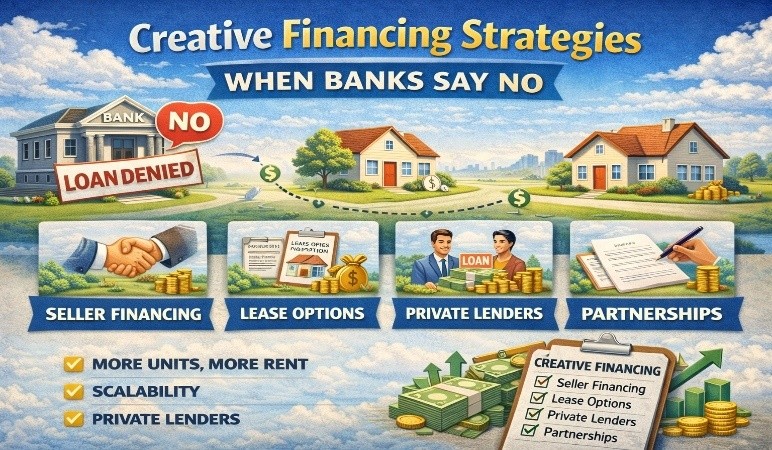
Creative Financing Strategies When Banks Say No
Why Traditional Financing Isn't Always Available
Banks have rigid lending criteria. Sometimes you don't qualify. Sometimes the property doesn't qualify. Sometimes you've maxed out conventional loans. Creative financing fills these gaps and can actually offer better terms than traditional mortgages.
Strategy 1: Seller Financing How It Works
The seller acts as the bank. You make payments directly to them instead of a mortgage company. Property title transfers to you, but seller holds a lien until paid off.
When Sellers Agree
• Property owned free and clear
• Seller wants passive income stream
• Motivated seller (estate sale, divorce, relocation)
• Property hard to finance conventionally
• Seller trusts you as investor
Typical Terms
• Down payment: 10-20% (negotiable)
• Interest rate: 5-8%
• Amortization: 20-30 years
• Balloon payment: 5-10 years
• Monthly payments to seller
Advantages
• No bank approval needed
• Flexible terms
• Faster closing
• Can work with bad credit
• Lower closing costs
How to Propose It
Don't lead with seller financing. Make conventional offer first. If seller counters or negotiations stall, ask: 'Would you consider carrying some financing?'
Strategy 2: Lease Options (Lease Purchase) How It Works
You lease the property with an option to purchase at a predetermined price within a specific timeframe. Part of rent may credit toward purchase.
Structure
• Option fee: $5,000-$15,000 (non-refundable)
• Lease term: 1-3 years
• Purchase price: Set at signing
• Rent credits: 20-50% of monthly rent
• You control property but don't own yet
When to Use
• You need time to improve credit
• You need to prove property cash flows
• You want to lock in price in appreciating market
• You need time to save for down payment
Strategy 3: Hard Money Loans What They Are
Short-term loans from private lenders based on property value, not your credit or income.
Typical Terms
• Interest: 10-15%
• Points: 2-5 points upfront
• Term: 6-24 months
• LTV: 65-75% of ARV
• Fast closing: 7-14 days
When to Use
• BRRRR method (short-term, will refinance)
• Fix-and-flip projects
• Time-sensitive deals
• Property won't qualify for conventional loan
Exit Strategy Required
Hard money is expensive. Have clear plan to pay it off:
• Refinance into conventional loan
• Sell property
• Pay off with cash from other source
Strategy 4: Private Money Lenders Who They Are
Individual investors lending their own money. Often friends, family, colleagues, or members of investor groups.
Typical Terms
• Interest: 6-12%
• Term: Flexible (1-5+ years)
• No credit check
• Secured by property
How to Find Them
• Local real estate investor meetups
• Your personal network
• Online investor forums
• Attorneys and accountants with wealthy clients
Strategy 5: Partnerships and Joint Ventures Structure
Partner brings capital, you bring expertise and work. Split profits according to agreement.
Common Splits
• 50/50 (equal partners)
• 60/40 (you take larger share for doing the work)
• 70/30 (money partner takes smaller share as passive investor)
Key Agreement Points
• Who manages the property?
• How are decisions made?
• What happens if someone wants out?
• How are profits distributed?
• Who covers unexpected costs?
Always use written partnership agreements.
Strategy 6: Home Equity Line of Credit (HELOC) How It Works
Borrow against equity in your primary residence to fund investment property purchases.
Advantages
• No appraisal on investment property needed
• Lower interest rates (5-8%)
• Access to large amounts ($50K-$200K+)
• Can pay back and reuse (revolving credit)
Risks
• Your home is collateral
• Variable interest rates
• Must qualify based on primary home
Strategy 7: Subject-To Financing How It Works
You take over the seller's existing mortgage payments. Property deed transfers to you, but mortgage stays in seller's name.
When Sellers Agree
• Facing foreclosure
• Underwater on mortgage
• Need to relocate immediately
• Can't afford two mortgages
Legal Considerations
Most mortgages have due-on-sale clauses. Technically the lender can call the loan. In practice, they rarely do if payments continue. Still risky - consult an attorney.
Strategy 8: Assumable Mortgages How It Works
You assume the seller's existing mortgage (with lender approval). Much more common with FHA, VA, and USDA loans.
Benefits
• Lock in seller's interest rate
• Lower closing costs
• Valuable if rates have risen
Process
• Verify loan is assumable
• Apply with existing lender
• Meet lender's qualification standards
• Pay seller equity difference
Combining Strategies
Example Deal Structure:
Purchase Price: $200,000
• Seller financing: $140,000 (first position)
• Your cash down payment: $30,000
• Private money for repairs: $30,000 (second position)
Total: $200,000 purchase + $30,000 rehab funded with zero bank involvement.
Risks and Protections
Creative financing carries risks:
• Higher interest rates
• Balloon payments
• Personal liability
• Due-on-sale clauses
• No standard protection
Always:
• Use written agreements
• Hire real estate attorney
• Do your due diligence
• Have exit strategy
• Run conservative numbers
When to Use Creative Financing
• You've maxed conventional loan limits
• You have credit issues
• You're buying unique properties
• You need to move faster than banks allow
• Deal makes sense but doesn't fit bank's boxes
Creative financing opens doors that traditional lending closes. Master these strategies and you'll never let a good deal slip away because 'the bank said no.'

0 Comment