


 Feb 17, 2026
 0 Comment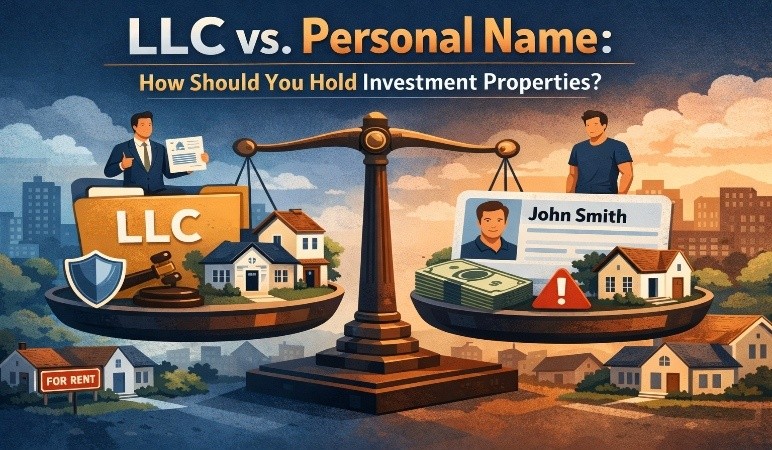
LLC vs. Personal Name: How Should You Hold Investment Properties?
The Entity Structure Decision
How you hold title to investment properties affects your taxes, liability protection, and financing options. Most new investors start holding properties in their personal name. As portfolios grow, the question becomes: should I transfer properties to an LLC?
This guide breaks down the pros, cons, and practical considerations of each approach.
Holding Properties in Personal Name Advantages
Easier Financing:
• Access to residential mortgages (better rates, longer terms)
• Lower down payments (15-25% vs 25-30%)
• More lender options
• Fannie Mae allows up to 10 financed properties
Simplicity:
• No annual LLC fees or paperwork
• Simpler tax filing (Schedule E on personal return)
• Lower accounting costs
• No corporate formalities
Lower Costs:
• No LLC formation fees ($100-$800)
• No annual state fees ($50-$800/year)
• Lower insurance premiums
• Cheaper bookkeeping
Disadvantages
Liability Exposure:
• Your personal assets at risk
• One lawsuit can take everything
• Home, cars, savings, retirement accounts potentially exposed
No Privacy:
• Your name on public record
• Address discoverable
• Easy target for lawsuits
Estate Planning Challenges:
• Properties go through probate
• More complex to transfer to heirs
Holding Properties in LLC Advantages
Liability Protection:
• LLC shields personal assets
• Lawsuit against LLC doesn't touch your home/savings
• Each LLC limits exposure to properties within it
Privacy:
• LLC name on public records, not yours
• Harder for tenants/others to find you personally
Professional Image:
• Looks more established to vendors, tenants
• Easier to brand your business
Estate Planning Benefits:
• Transfer LLC interests without probate
• Easier succession planning
• Can gift LLC interests to family
Tax Flexibility:
• Can elect S-Corp taxation (may save self-employment tax)
• Easier to bring in partners
Disadvantages
Financing Challenges:
• Commercial loans required (shorter terms, higher rates)
• Some lenders won't lend to LLCs for 1-4 units
• May need personal guarantee anyway
• Due-on-sale clause may trigger if transferring existing mortgaged property
Higher Costs:
• Formation fees
• Annual state fees
• Separate tax returns
• Higher accounting costs
• Increased insurance premiums
Complexity:
• Must maintain corporate formalities
• Separate bank accounts required
• Operating agreement needed
• Annual reports and filings
The Hybrid Approach: Best of Both Worlds
Many experienced investors use this strategy:
1. Buy property in personal name (better financing)
2. Season the property (6-12 months)
3. Transfer to LLC using quit-claim deed
4. Update insurance to LLC
Considerations:
• Most mortgages have due-on-sale clauses
• Technically lender could call the loan
• In practice, rarely happens if payments continue
• Some investors notify lender, others don't
• Consult attorney in your state
LLC Structuring Strategies Strategy 1: One LLC for All Properties
Pros:
• Lowest cost (one set of fees)
• Simplest to manage
• One tax return
Cons:
• All properties exposed to liability from any one property
• All eggs in one basket
Best for: Beginners with 1-3 properties
Strategy 2: Series LLC
Available in some states (Delaware, Nevada, Illinois, etc.). One LLC with multiple 'series,' each holding separate properties.
Pros:
• Liability separation like separate LLCs
• Lower cost than multiple LLCs
Cons:
• Not recognized in all states
• Complex legal structure
• Uncertain legal precedent
Strategy 3: Multiple LLCs
Separate LLC for each property or small group of properties.
Pros:
• Maximum liability protection
• Problem with one property doesn't affect others
Cons:
• High annual costs ($500-$5,000+ per year)
• Complex to manage
• Multiple tax returns
Best for: Larger portfolios (10+ properties) or high-value properties
Strategy 4: Holding Company Structure
One parent LLC owns multiple subsidiary LLCs, each holding properties.
Pros:
• Liability separation
• Easier to manage than completely separate LLCs
• Professional structure
Cons:
• Most complex
• Highest setup and maintenance costs
Best for: Serious investors with 20+ properties
Insurance: Your First Line of Defense
Regardless of entity structure, insurance is critical:
Required Coverage:
• Landlord/rental dwelling policy
• Liability coverage ($1-2 million minimum)
• Property damage coverage
• Loss of rents coverage
Recommended Additional Coverage:
• Umbrella policy ($1-5 million)
• Flood insurance (if in flood zone)
• Earthquake insurance (if in earthquake zone)
Good insurance can be more valuable than an LLC for actual risk reduction.
State Considerations
Best states for forming LLCs:
• Wyoming: Low fees, strong privacy
• Nevada: No state income tax, strong asset protection
• Delaware: Well-established LLC law, business-friendly courts
Note: You may need to register as 'foreign LLC' in states where properties are located, adding costs.
When to Form an LLC
Consider LLC when:
• You have 3+ rental properties
• Properties are high value ($500K+)
• You have significant personal assets to protect
• You're getting serious about real estate investing
• You want to add partners
Stay in personal name when:
• Just starting with 1-2 properties
• You have low net worth (little to protect)
• You can't get financing in LLC name
• Cost of LLC exceeds benefit
Tax Considerations
LLC Tax Treatment Options:
1. Disregarded Entity (Single-Member LLC)
• Taxed like sole proprietorship
• Income reported on Schedule E
• Simplest tax treatment
2. Partnership (Multi-Member LLC)
• Files partnership return (Form 1065)
• Distributes K-1s to members
• More complex
3. S-Corporation Election
• Can reduce self-employment taxes
• Requires reasonable salary
• More complex and costly
• Usually not beneficial for rental properties
4. C-Corporation Election
• Rarely used for rental properties
• Double taxation issue
Most rental property LLCs should stay as disregarded entities or partnerships.
Due-on-Sale Clause Reality Check
Many investors transfer mortgaged properties to LLCs despite due-on-sale clauses:
Reality:
• Lenders rarely enforce if payments continue
• Banks don't want your property
• They want reliable payments
Risks:
• Lender could technically call the loan
• Could affect your relationship with lender
• Insurance complications if not disclosed
Safer approaches:
• Use land trust first, then assign to LLC
• Refinance into LLC name (if lender allows)
• Ask lender for permission (some will allow)
Recommended Approach for Most Investors
Properties 1-2: Personal name
• Focus on learning the business
• Maximize financing options
• Carry strong insurance
Properties 3-5: Form first LLC
• Transfer properties to LLC
• Maintain good insurance
• Accept commercial loan terms on future purchases if needed
Properties 6-10: Consider second LLC
• Separate highest-value property
• Or group by location/property type
Properties 10+: Multiple LLCs or series LLC
• Maximum protection strategy
• Professional structure
Consult with real estate attorney and CPA to design the right structure for your situation, state laws, and risk tolerance.
0 Comment