


 Feb 17, 2026
 0 Comment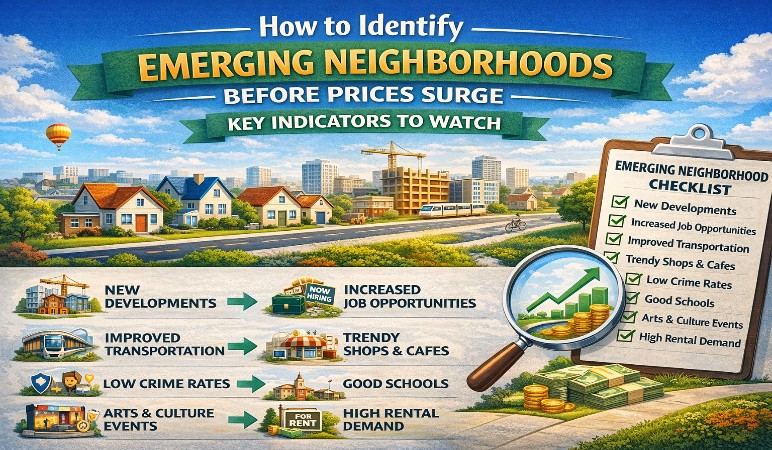
How to Identify Emerging Neighborhoods Before Prices Surge: Key Indicators to Watch
Why Timing Matters in Real Estate
The biggest returns in real estate investing come from buying in neighborhoods before they become popular. Miss the window by a year or two, and you'll pay 30-50% more for the same property. Get in early, and you'll ride the wave of appreciation while collecting rent.
This guide will teach you how to spot emerging neighborhoods using data, local knowledge, and pattern recognition that professional investors use.
The 12 Key Indicators of an Emerging Neighborhood 1. Decreasing Crime Rates
When crime statistics trend downward over 2-3 consecutive years, it signals improving safety. Check:
• FBI Crime Data Explorer
• Local police department statistics
• Neighborhood safety apps (Citizen, Neighbors)
• Community watch programs starting up
Look for 10%+ year-over-year improvement in violent crime rates.
2. New Business Openings
Follow the coffee shops and organic grocery stores. When national chains like Whole Foods, Trader Joe's, or Starbucks open locations, they've done extensive market research. Their presence signals:
• Rising household incomes
• Demographic shifts toward younger professionals
• Increasing foot traffic and community activity
Also watch for independent restaurants, breweries, and boutiques. These businesses don't open in declining areas.
3. Rising School Performance
Improving schools attract families and drive demand. Track:
• Test score trends (check GreatSchools.org)
• Teacher retention rates
• New school investments or renovations
• Parent involvement increasing
• Charter or magnet schools opening
Even if you're not targeting families, better schools raise ALL property values.
4. Infrastructure Investment
Government spending telegraphs future growth. Research:
• New transit lines or stations (light rail, subway, bus rapid transit)
• Road improvements and highway access
• Parks and public space upgrades
• Sewer and water system modernization
• Fiber internet installation
Major infrastructure projects take 5-10 years. Buy 2-3 years before completion.
5. Increasing Permit Activity
Building permits signal developer confidence. Check your city's building department for:
• New construction permits (residential and commercial)
• Major renovation permits
• Business license applications
Look for 20%+ year-over-year increases. Developers research markets carefully—follow their lead.
6. Decreasing Vacancy Rates
Falling vacancy in both rentals and retail spaces indicates growing demand. Target areas with:
• Residential vacancy under 5%
• Commercial vacancy declining
• For-sale inventory decreasing
• Days on market dropping
Low vacancy creates upward pressure on rents and prices.
7. Artist and Creative Migration
Artists and creatives are the canaries in the coal mine of gentrification. They move to affordable areas first, opening:
• Art galleries
• Music venues
• Artist studios and co-working spaces
• Alternative coffee shops
Within 3-5 years, young professionals follow, then families, then full gentrification.
8. Median Income Growth
Check Census data and local economic reports for:
• Household income increases above city average
• Educational attainment improving
• Homeownership rates rising
• Employment diversity increasing
Look for 5-10% income growth over 3 years.
9. Anchor Institutions Expanding
Universities, hospitals, and major employers drive neighborhood transformation. Watch for:
• University expansion plans
• Hospital system investments
• Tech companies opening offices
• Corporate headquarters relocating
Employees need housing. Buy within 1-2 miles of these anchors.
10. Historic District Designation
Historic preservation status attracts investment by:
• Enabling tax credits for renovation
• Protecting neighborhood character
• Attracting preservation-minded buyers
• Creating tourism opportunities
Properties in historic districts often appreciate faster than surrounding areas.
11. Investor Activity Increasing
Other investors voting with their wallets is a strong signal. Track:
• Cash purchases rising (indicates investors)
• Out-of-state buyers increasing
• Multiple offer situations becoming common
• Renovation activity visible on streets
When sophisticated investors move in, prices follow.
12. Rent Growth Outpacing City Average
Accelerating rents signal demand exceeding supply. Compare:
• Neighborhood rent growth vs. city average
• Year-over-year increases
• Rent-to-price ratios improving
Target areas with 5-10% annual rent growth.
How to Research Emerging Neighborhoods Online Data Sources
• Census.gov - demographic and economic data
• City-Data.com - comprehensive neighborhood statistics
• Zillow and Redfin - price and rent trends
• Walk Score - walkability and transit access
• Local city planning department - zoning and development plans
• Building permit databases - construction activity
• GreatSchools.org - school performance trends
Boots on the Ground
Data tells part of the story. Visit neighborhoods multiple times:
• Drive through on weekdays and weekends
• Walk the blocks, count renovation activity
• Talk to local business owners
• Attend community meetings
• Check out local restaurants and shops
• Observe who's walking around (demographics)
• Look for pride of ownership (landscaping, maintenance)
Local Knowledge
Connect with people who know the area:
• Real estate agents specializing in the neighborhood
• Property managers
• Local investors
• Community association leaders
• Long-time residents
• City planners
They'll share insights no database captures.
Timing Your Investment The Gentrification Curve
Neighborhoods evolve through predictable stages:
Stage 1 - Disinvestment: High vacancy, low prices, high crime. TOO EARLY for most investors.
Stage 2 - Pioneer: Artists and creatives move in. Crime stabilizing. BEST TIME TO BUY.
Stage 3 - Early Gentrification: Young professionals arriving. New businesses opening. STILL GOOD.
Stage 4 - Advanced Gentrification: Established neighborhood. Strong appreciation. PRICES PEAKING.
Stage 5 - Maturity: Premium prices. Limited upside. TOO LATE.
Buy in Stage 2-3 for maximum returns.
Case Study: Successful Early Entry
Location: East Nashville, Tennessee
Timeline: 2008-2015
• 2008: Median home price $120,000
• Indicators present: Artists moving in, new music venues, coffee shops opening, crime declining
• 2010: First investor wave, median price $145,000
• 2012: Young professionals arriving, breweries and restaurants opening, median $180,000
• 2015: Fully gentrified, median $275,000
• 2023: Median $525,000
Investors who bought in 2008-2010 saw 330-380% appreciation.
Common Mistakes When Hunting Emerging Neighborhoods 1. Confusing Cheap with Emerging
Low prices alone don't signal opportunity. Declining neighborhoods stay declining. Look for improvement trends, not just affordability.
2. Ignoring Crime
Even great price fundamentals won't overcome persistent crime. Safety MUST be improving for gentrification to occur.
3. Being Too Early
Pioneer neighborhoods carry high risk. Most investors should wait until Stage 2-3 when trends are clearer.
4. Not Verifying Data
Trust but verify. One positive indicator isn't enough. Look for 5-6 converging signals.
5. Following the Herd
By the time everyone knows about a neighborhood, it's already gentrified. Do your research before it's obvious.
Your Action Plan
1. Identify 5-10 potentially emerging neighborhoods in your target city
2. Research each using the 12 indicators above
3. Visit the top 3 in person multiple times
4. Talk to local experts and residents
5. Create a scoring system and rank neighborhoods
6. Start looking for deals in your top choice
7. Be patient - buy when you find the right property at the right price
The Bottom Line
Spotting emerging neighborhoods before prices surge requires systematic research, local knowledge, and patience. The biggest mistake investors make is waiting for certainty—by then, prices have already jumped.
Use these 12 indicators to identify neighborhoods in transition. Get in during Stage 2-3 of gentrification. Then hold for 5-10 years while the neighborhood transforms around you.
The best investment opportunities are obvious in hindsight but uncertain in the moment. Do your homework, trust the data, and don't wait for perfection.



0 Comment